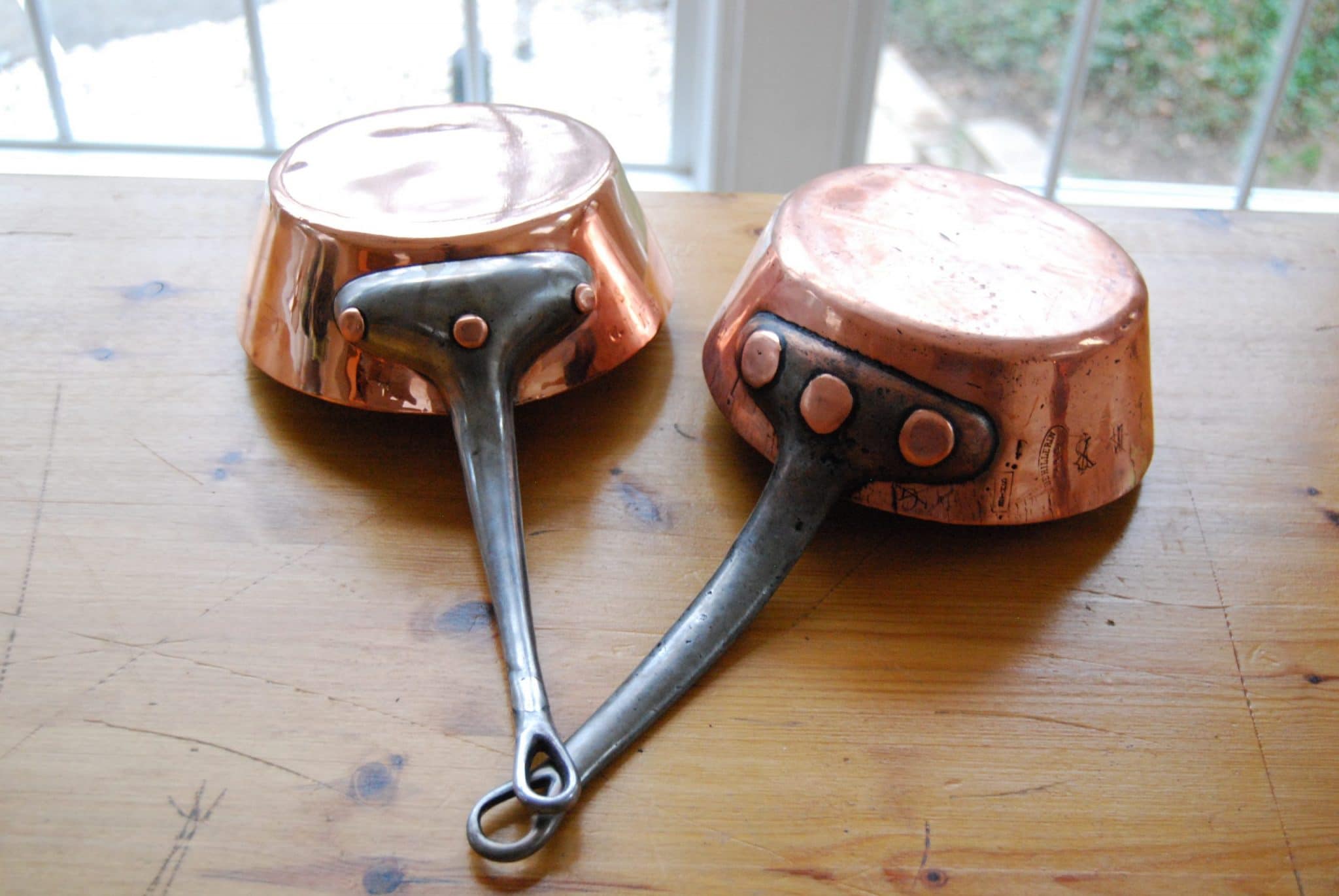
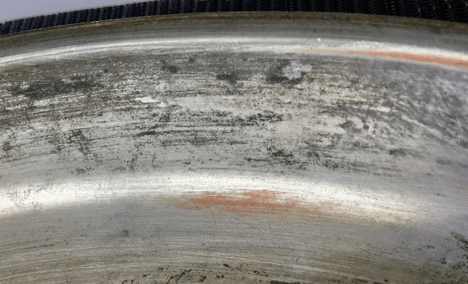
I’ve compiled a list of companies in North America and Europe that offer copper restoration and retinning services. Entries are in alphabetical order by company name.
If you’re working with a retinner for the first time, please see “What to look for a retinner or restorer” towards the bottom of the page.
Last updated: October 2025
United States
- Al Bar Wilmette Platers, Wilmette, Illinois (email info@albarwilmette.com)
- Archer Tinning & Retinning, Chicago, Illinois
- Batterby House, Hudson, New York
- Brooklyn Copper Cookware (retinning/restoration currently suspended), New York, New York
- East Coast Tinning (aka Duparquet), Providence, Rhode Island
- Hammersmith, Scotch Plains, New Jersey
- House Copper, Wisconsin
- Oregon Retinners, Hubbard, Oregon
- Rocky Mountain Retinning, Denver, Colorado
- Round Door Retinning, Sacramento, California
- Seaside Hand Tinning (formerly Southwest Hand Tinning), Cape Cod, Massachusetts
- Sertodo, Austin, Texas
- Zapffe Silversmiths, Seattle, Washington
Canada
- The Copper Tinner, Toronto
Europe
- Atelier du Cuivre, Villedieu-les-Poêles, France
- Étamage Haute-Saône, Franche-Comté, France
- Gameson & Sons, Newcastle-upon-Tyne, England
- Mauviel, Villedieu-les-Poêles, France (email insitu1830@mauviel.com)
- Newlyn Tinning, Cornwall, England
- Normandy Kitchen Copper, Laval, France
- Ruffoni, Omegna, Italy (email service@ruffoni.net)
- Sherwood Tinning, Bedfordshire, England
If you have an addition or update for this page, please let me know.
What to look for in a retinner or restorer
Below are some factors to consider.
Is copper restoration and retinning a substantial part of the business? You want a company that routinely and frequently tins pots and pans, not one where this work is an occasional sideline. You want a place that advertises copper work as a passion and to which lots of people send their stuff, because if you need restoration of a precious antique pan, you need a company with experience cleaning and tinning without obliterating the character of an antique piece. (Here’s a cautionary tale about that from my own experience.)
Does the company do the work in-house? It’s not a dealbreaker if a shop outsources its retinning, but you need to know who is actually doing the work so that you can assess what their practices are. But if a shop outsources, they may not want to tell you where they send it because they don’t want you going around them straight to the tinner. I can understand this from a business perspective, but as a consumer, you should insist on knowing the tinner as it is in your best interest. Also, if you intend to retin lots of copper, it may also be in your best financial interest to work directly with the tinner and save yourself some money.
Does the company use specialty tin ingots or pellets that are 99% pure or better? The only correct answer here is “Yes, and we’d be happy to tell you where we get it and show you the assays to prove its purity.” You cannot accept anything less than high-purity tin of documented quality backed by a responsible and accountable supplier. (Bad tin is the story of a retinner who used “tinning compound” rather than pure tin on several of my pans.)
Can you see some examples of the work they’ve done? You should expect to see lots of photos of really beautiful copper that looks like it’s been to the beauty parlor. Look for bright tin of consistent color and texture with subtle wipe marks and no black splotches or fingerprints. Look for closeups that tell you that the shop is proud of its work.
If you get “yes!” answers to all of these questions from the website, word of mouth, or from asking the shop directly, you’ll likely have a positive experience.