Guest post: Gerhard’s Trio Infernale
“They easily replace a dumbbell workout…”

“This is far thicker than the 2.5 mm at which modern stainless lined copper maxes out.”
It can be said that every antique copper pan has a story to tell. Well, pour yourself some tea, because

Yes, you read that right: it’s almost 20 inches across, and that’s just the body of the pan.

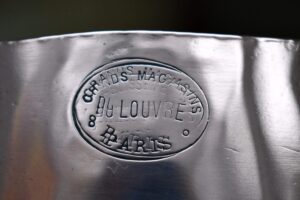
Okay, stamp detectives, get out your magnifying glass — you’ll need it for this one.

When a seller underestimates the quality of a piece, it can mean that a deal is to be had.

This hefty sauté pan is a beautiful example of 1920s-1930s copper.

The stamps on these pieces are from two stores in Paris at the turn of the 20th century.

This gorgeous piece is a snapshot of Gaillard’s work at the end of the 19th century.

“I found it in the basement of an antique shop for only $40.”

These mid-20th century Gaillard pans still have 19th-century craftsmanship.

A side-by-side comparison of pre-war and post-war Jacquotot construction.

This pan watched the turn of the 20th century from the kitchens of one of the most glamorous rail routes

This pan has been restored — masterfully — by Rocky Mountain Retinning.

This beautiful pan has served in one of the finest restaurants in the world — and I think I know

It’s unusual — and wonderful — to see an antique Jacquotot pan with its original lid.
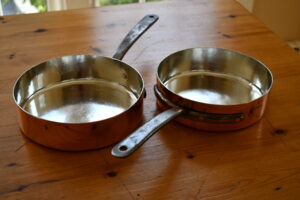
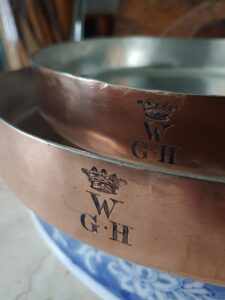
A reader has helped me identify the maker, and also the likely former (royal) owner of these beautiful and unusual
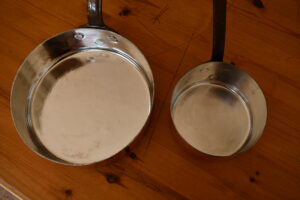
These aren’t just lovely antique pans — they’re examples of 19th century retail branding.

This is a beautiful example of Mauviel craftsmanship, and looking closely at it, I can make some educated guesses as

These are the most historical of the pans I have, and while they’re not monumental pieces, I find them and

When Erik Undiks at Rocky Mountain Retinning worked on this pan for me, he said it was the thickest sauté pan

This huge and heavy sauté pan has achieved a glorious state of patina.